
The math is mostly simple: The cheaper the MBBS seat, the easier it is to get into. The affordable seats are taken up by those well under AIR 100,000. But not in all states, says Ashok Hegde, founder, neet2seat.

Egypt, Pakistan, Saudi Arabia and Turkey met in Islamabad in what analysts say is the formal opening of a new diplomatic formation that could reshape the post-war regional order. Their immediate goal is a ceasefire; their larger ambition is to ensure that neither Iran nor Israel emerges from this war in a dominant position. Pakistan's foreign minister then flew directly to Beijing and mooted a Chinese role as guarantor of any eventual agreement. Prem Panicker continues his must read daily blog on the Gulf War.
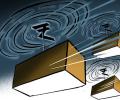
At nearly 82 per cent of GDP, India's public debt is very high, but the country doesn't face debt sustainability issue on account of high growth rate and higher share of local currency debt, NCAER Director General Poonam Gupta has said. Participating in an event organised by NCAER, Gupta said India's high debt levels are sustainable for now because of higher real or nominal GDP and as most of the debt is held in rupee.
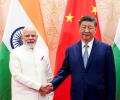
'What's currently underway is not a 'reset'.' 'What needs to be arrived at is a new balance.'

'Disengagement is merely the first step in a lengthy process of arriving at a new normal along the LAC in Eastern Ladakh and the entire land boundary.' 'The Indian government should insist on the restoration of the status quo ante in Eastern Ladakh.'

'If such a practice were feasible, every state would seek additional funds, posing a significant risk to the overall health of the economy.'

The Xi Jinping regime might try to quell internal distress by directing nationalism and militarism against India, warn Ajay Shah and Gautam Bambawale.

On October 29, WhatsApp announced it was suing NSO Group for selling its software, Pegasus, which has the ability to compromise a device and get access to all of a target's data. Spooked by revelations that activists and journalists were spied upon by using NSO Group's spyware, many have moved to alternative messaging platforms such as Signal and Telegram.

Double tax exemption on wages paid to women can encourage companies to hire, retain and compensate women better, argues Nitin Pai.

The spending on a typical RT-PCR test would take up 23 per cent of the monthly income of an average Indian, compared to 2 per cent in China. This is one of the deepest cuts in the pocket of an individual, in comparison to 14 other countries, reports Abhishek Waghmare.

'The men in black suits and hair dye in Beijing have not only completely blown the cover story of "peaceful rise," but have managed to antagonise regional powers in the Indo-Pacific.'

The perfunctory management of external affairs has left India's foreign policy establishment largely unprepared to manage the consequences of dramatic international developments, says Nitin Pai.

New Delhi can strengthen its leverage by having better relations with the two than they have with each other.

'Despite the current tension at Doklam and the risk of escalation on the Himalayan land frontier, it is the Indian Ocean we need to worry about more,' says Nitin Pai.

We must see New Delhi's position as a signal of competition to the Chinese grand design for the 21st century world, says Nitin Pai.

'If Myanmar falls to China, let it.' 'Sooner or later the rulers of the country will have to call New Delhi.'

The demand for OROP has been projected as an unambiguous issue but a good policy argument must have a sound economic element.
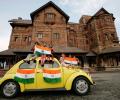
Though growth in China is unlikely to slow down soon, India should prepare to take advantage of a shifting of gears there.
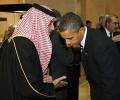
Further deterioration of the US-Saudi relationship will have geo-economic and geopolitical effects, says Nitin Pai.

No one really knows what proportion of the nation's wealth and income are available for defence

Colombo's enduring interests suggest the relationship between the Sri Lanka and China will only strengthen, says Nitin Pai.
.jpg)
Modi government must push reforms at a fast pace to restore growth.

In a few years from now, India will be looking at an entirely different type of military adversary across the borders, in our waters, in the air, in space and in our communication networks, says Nitin Pai.

India has some ability to influence what the world order will look like, but it needs to make structural changes to the ministries of external affairs and commerce, and evolve formal coordination mechanisms with the ministries of finance and home, says Nitin Pai

The government's leaks to the media and General Singh's very vocal comments on the charges against him have played right into the hands of separatists and their cross-border sponsors, says Nitin Pai

The failure to restructure our armed forces in line with contemporary needs 14 years after the Kargil war will impose strategic costs beyond just delays and scandals, says Nitin Pai

Full liberalisation of the defence industry is necessary for both combat-readiness and security of long-term supplies, says Nitin Pai.

It is time to throw an outer ring around India's national security by proactively engaging in areas immediately outside our neighbourhood. Such a ring will not only insulate India from emerging threats, but also create new leverage in securing our own neighbourhood, says Nitin Pai.

Having reached the Red Planet, ISRO can now focus on getting humans in space and secure the resources to do it

IIT Kharagpur set to be a one-stop-shop for all your parents' 'doctor-engineer' dreams! :-)

Stressing that both the government and the opposition have 'important roles to play', the President said, "While giving expression to their political ideas both must move forward in tandem to ensure that development of the country and welfare of its people are promoted consistently."

Universities must be the bastions of free speech and expression. It must be the arena where diverse and conflicting schools of thought contend. There should be no room for intolerance, prejudice and hatred within the spaces of this institution. Further, it must act as flag-bearer for the coexistence of multiple views, thoughts and philosophies, says Pranab Mukherjee.

Here's the full text of President Ram Nath Kovind's address to the nation on the eve of 71st Republic Day.

The proposed changes to the child labour law to allow children and adolescents to work for their families would be most retrograde and regressive, say Shinzani Jain and Paranjoy Guha Thakurta.
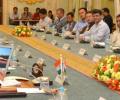
Thirty one outstanding teachers were invited to Rashtrapati Bhavan for a first-ever in-residence programme.

President Pranab Mukherjee talked extensively about the forthcoming Lok Sabha polls and the role of lawmakers during his address to the nation on the eve of Republic Day.

The soul of India resides in pluralism and tolerance. This plurality of our society has come through assimilation of ideas over centuries. Secularism and inclusion are a matter of faith for us. It is our composite culture which makes us into one nation.
